
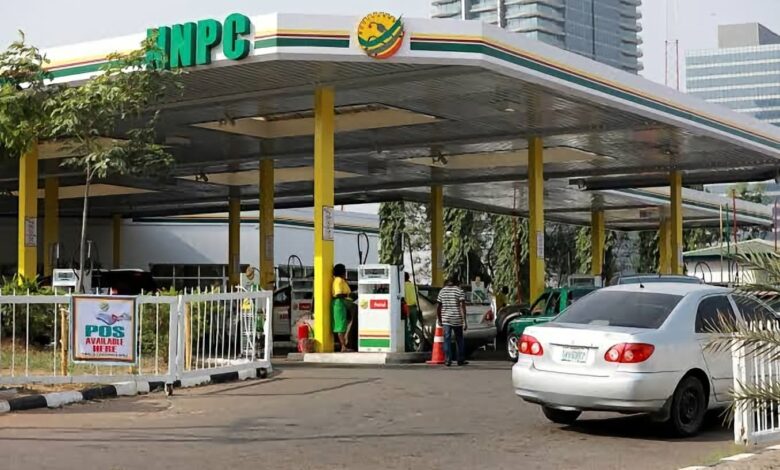
The Federal Government has announced a raft of measures to cushion Nigerian households against rising petrol prices, including an agreement by NNPC Retail to forgo its retail profit margin and sell petrol at cost.
According to a State House press release issued on October 8, 2026, by the Special Adviser to the President on Information and Strategy, Bayo Onanuga, NNPC Retail, which already sells at the lowest price in the market, will implement the discount within the next 30 days. This means if the landing cost is N1300 per litre, it will be sold to Nigerians, especially commercial vehicles, at the same price.
The measure, backed by President Bola Ahmed Tinubu, was announced by the Finance Minister and Coordinating Minister of the Economy, Taiwo Oyedele. Oyedele said he hopes other marketers will emulate NNPC, noting that the current sharp rise in crude and petrol prices is not expected to last long.
Oyedele stressed that the gesture must not be misinterpreted as a restoration of petrol subsidy, which ended on May 29, 2023. He explained that the government is not reversing reform but ensuring its gains reach more Nigerians faster.
Other measures announced include forward sales of crude to domestic refineries as production rises and previously committed crude is freed up, to shield pump prices from global volatility. The government is also negotiating a ceiling of N1,350 per litre on ex-gantry or landing cost to keep pump prices stable.
Under the ceiling arrangement, where costs rise above N1,350, refiners and importers will carry the shortfall and recover it later when crude prices or exchange rates allow, without breaching the ceiling. “This is neither a subsidy nor a price control: it is designed to smooth prices over time rather than suppressing them,” Oyedele said.
The government also announced a faster rollout of Compressed Natural Gas with states, with expectation that transporters will pass savings of 60-70 percent compared to petrol to passengers; increased funding for cash transfers to vulnerable households and subsidised credit for small businesses; a clampdown on multiple road taxes and levies; and a cut in regulatory costs that inflate prices.
Additional plans include consideration of an excess profit tax on operators who take undue advantage of consumers, with proceeds to fund transport support for minimum-wage earners; investment in a National Strategic Fuel Reserve to prevent artificial scarcity and deter hoarding; and improved traffic management and logistics efficiency using NIPOST’s new address codes to reduce fuel consumption.