
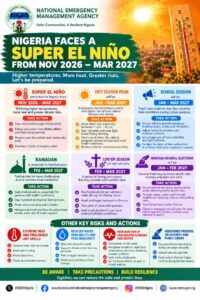
The National Emergency Management Agency (NEMA) has alerted Nigerians to prepare for a Super El Niño weather phenomenon projected to occur from November 2026 to March 2027, warning that it will bring higher temperatures, extreme heat and greater climate risks.
In a public advisory with the theme, “Safer Communities, A Resilient Nigeria”, the Agency said the phenomenon could cause hotter temperatures, less rainfall, drought, floods and food shortages. It stated that the peak of the hot season is expected between January and March 2027, which will be the hottest months with higher risk of heat-related illnesses and deaths.
NEMA warned that the extreme weather will coincide with major national events including the school session, the 2027 general elections slated for January to February, the Ramadan fast and the Christian Lenten season, both projected for February to March 2027. The agency noted that fasting may be more challenging and election campaigns may pose health risks due to prolonged exposure to the sun.
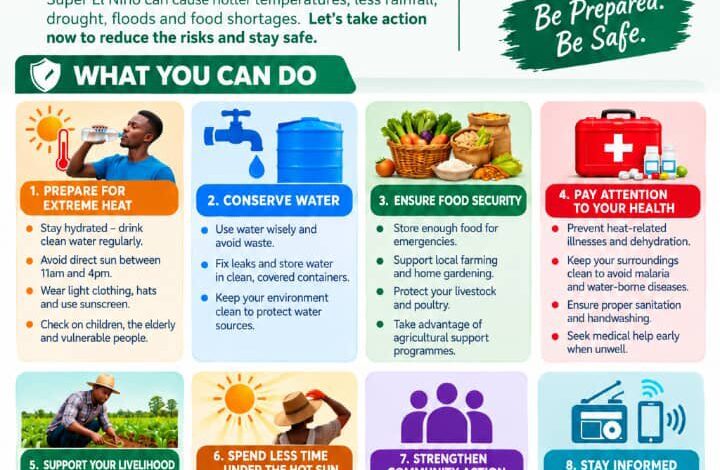
To mitigate the impact, the Agency advised Nigerians to prepare for extreme heat by staying hydrated with clean water regularly, avoiding direct sun between 11am and 4pm, wearing light clothing and checking on children, the elderly and vulnerable people. It also urged citizens to conserve water by fixing leaks and storing water in clean, covered containers, and to ensure food security by storing enough food and supporting local farming.
Other measures recommended include paying attention to health by ensuring proper sanitation and seeking medical help early, supporting livelihoods through drought-resistant crops, spending less time under the hot sun, strengthening community action by joining early warning efforts, and staying informed through official alerts from NEMA, NiMet and State Governments.
On specific risks, NEMA advised schools to provide adequate drinking water, shade and ventilation and to be alert for signs of heat exhaustion in children such as dizziness and nausea. For election activities, it urged provision of shade, water and first-aid facilities at campaign venues and polling units, and for worshippers during Ramadan and Lent, it advised staying hydrated during non-fasting hours and seeking medical advice for persons with health conditions.
The Agency further warned of other key risks including extreme heat and prolonged dry spells, reduced water availability and food insecurity, increased risk of heat-related illnesses and deaths, and heightened pressure on security and public order during the election season. It urged Nigerians to avoid open burning to prevent bush fires, avoid leaving children or pets in closed vehicles, and to stay peaceful and law-abiding.
NEMA concluded with a call for collective resilience, stating: “Be Aware, Take Precautions, Build Resilience. Together, we can reduce the risks and protect lives.”