
The Association of Licensed Telecommunications Operators of Nigeria (ALTON) has declared that the country’s telecommunications operators have invested billions of dollars over the past 25 years to bridge Nigeria’s digital divide, describing telecommunications as the foundation upon which the nation’s digital economy now rests.
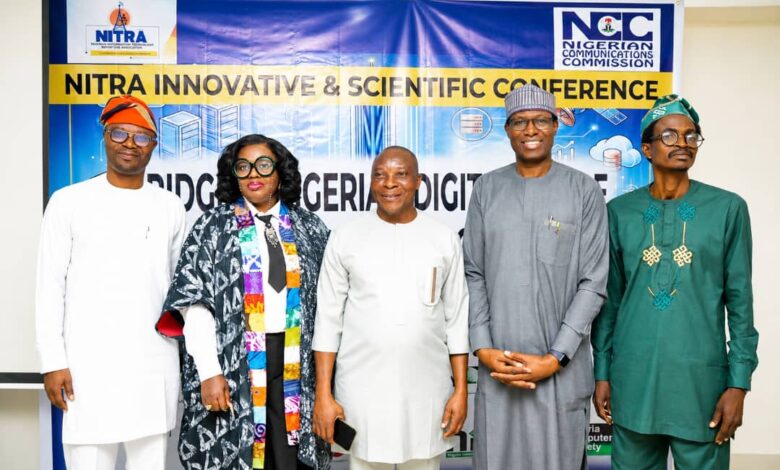
ALTON Chairman, Engr. Gbenga Adebayo, made the assertion in a keynote address titled _“A Chronicle of Telecom Operators’ Efforts in Bridging Nigeria’s Digital Divide Through Innovation: Achievements, Challenges and Future Prospects,”_ and presented at the Nigeria Information Technology Reporters Association (NITRA) Innovative Conference 2026 with the theme, _*“Bridging Nigeria’s Digital Divide with Scientific Innovation.”*_
According to Adebayo, Nigeria’s telecommunications sector has evolved into one of Africa’s most remarkable success stories, growing from fewer than half a million connected telephone lines before GSM liberalisation in 2001 to over 200 million active subscriptions today.
“Nigeria’s telecommunications sector represents one of Africa’s most remarkable success stories in economic liberalisation and digital transformation,” he said, adding that the industry has transformed “from a privileged service available to a few into the critical infrastructure that underpins nearly every aspect of modern life.”
He noted that telecommunications now powers virtually every aspect of Nigeria’s digital economy, including banking, healthcare, education, agriculture, governance, commerce, security and entertainment.
“Every digital payment, online classroom, telemedicine consultation, emergency response and e-government service depends on reliable telecommunications networks,” he said, stressing that the industry’s impact “extends far beyond communications; it has become the backbone of national development.”
Adebayo revealed that operators have committed billions of dollars to expanding mobile networks, fibre-optic infrastructure, international connectivity, data centres, cloud platforms, renewable energy systems and next-generation technologies such as 5G.
He explained that these investments have accelerated broadband penetration, strengthened financial inclusion and created opportunities for digital entrepreneurship and innovation across the country.
The ALTON Chairman said the industry’s evolution has moved from nationwide GSM voice deployment to mobile internet through GPRS, EDGE and 3G technologies before advancing to 4G, Fibre-to-the-Home (FTTH) and 5G, positioning Nigeria for the next generation of digital innovation.
He further disclosed that operators have continued extending connectivity to rural and underserved communities through network expansion, infrastructure sharing, renewable energy solutions and strategic collaboration with government, thereby improving access to education, healthcare, financial services and economic opportunities.
Despite the remarkable progress, Adebayo warned that significant obstacles continue to threaten future investments in the sector.
“Multiple taxation, inconsistent Right-of-Way policies, vandalism and theft of telecommunications infrastructure, rising energy costs, foreign exchange volatility, regulatory uncertainty and affordability constraints all threaten the pace of future investment,” he stated.
Looking ahead, he said emerging technologies such as Artificial Intelligence (AI), the Internet of Things (IoT), cloud computing, satellite broadband and 5G present enormous opportunities to deepen digital inclusion, improve productivity and stimulate innovation, provided sustained investments and supportive government policies are maintained.
“Bridging Nigeria’s digital divide is a shared national responsibility,” he declared, adding that “universal digital inclusion will require continued partnership across all levels of government, the private sector and civil society.”
Adebayo commended President Bola Ahmed Tinubu’s administration for recognising digital infrastructure as a critical enabler of economic growth and national development, saying the government’s policy direction has strengthened investor confidence in the sector.
He also praised the Nigerian Communications Commission (NCC), led by Dr. Aminu Maida, for adopting what he described as a transparent, consultative and evidence-based regulatory approach.
“The Commission has continued to demonstrate that effective regulation is achieved not through confrontation but through collaboration, balancing consumer protection with the need for a sustainable industry capable of attracting continued investment,” he said.
Among recent milestones, he highlighted the resolution of the long-standing USSD debt dispute between telecom operators and banks, the review of retail tariff frameworks after years of mounting operational costs and the implementation of the Critical National Information Infrastructure (CNII) framework.
On service quality, Adebayo maintained that operators alone should not be blamed for network performance, insisting that improving quality of service requires collective responsibility. “Quality of Service (QoS) cannot be improved through fines and penalties alone,” he said.
While affirming operators’ accountability to consumers, he noted that network performance is heavily influenced by unreliable electricity supply, fibre cuts during road construction, vandalism, insecurity, Right-of-Way delays and multiple taxation.
He, therefore, advocated what he described as a “Whole-of-Society Approach” to safeguarding telecommunications infrastructure and improving network reliability.
The ALTON Chairman also appealed to Nigerians to support efforts aimed at protecting telecommunications infrastructure.
“If you see anyone tampering with telecommunications infrastructure, report it. If you see something, say something,” he urged, noting that every citizen has a role to play in ensuring network stability and improved quality of service.
Addressing recent speculation over possible increases in telecom tariffs, Adebayo dismissed reports linking the Nigerian Communications Commission’s ongoing Mobile Termination Rate (MTR) cost study with any imminent review of retail tariffs.
“That interpretation is incorrect,” he said, explaining that the exercise is strictly a wholesale interconnection cost determination and not a proposal to increase consumer tariffs.
“As I have previously stated publicly, there is currently no industry proposal before the NCC seeking a review of retail tariffs arising from this exercise,” he added, noting that operators are instead focused on “improving customer experience, expanding coverage, increasing network resilience and delivering greater value to subscribers.”
Reaffirming ALTON’s commitment to advancing Nigeria’s digital economy, Adebayo concluded that telecommunications has become indispensable to national development.
“Telecommunications is no longer simply an industry; it is the foundation upon which Nigeria’s digital future is being built. Every investment in resilient telecommunications infrastructure is an investment in economic growth, innovation, national security and inclusive development,” he said.
He expressed optimism that with sustained collaboration and investment, “Nigeria will not only bridge its digital divide but will emerge as one of the world’s leading digital economies.”