
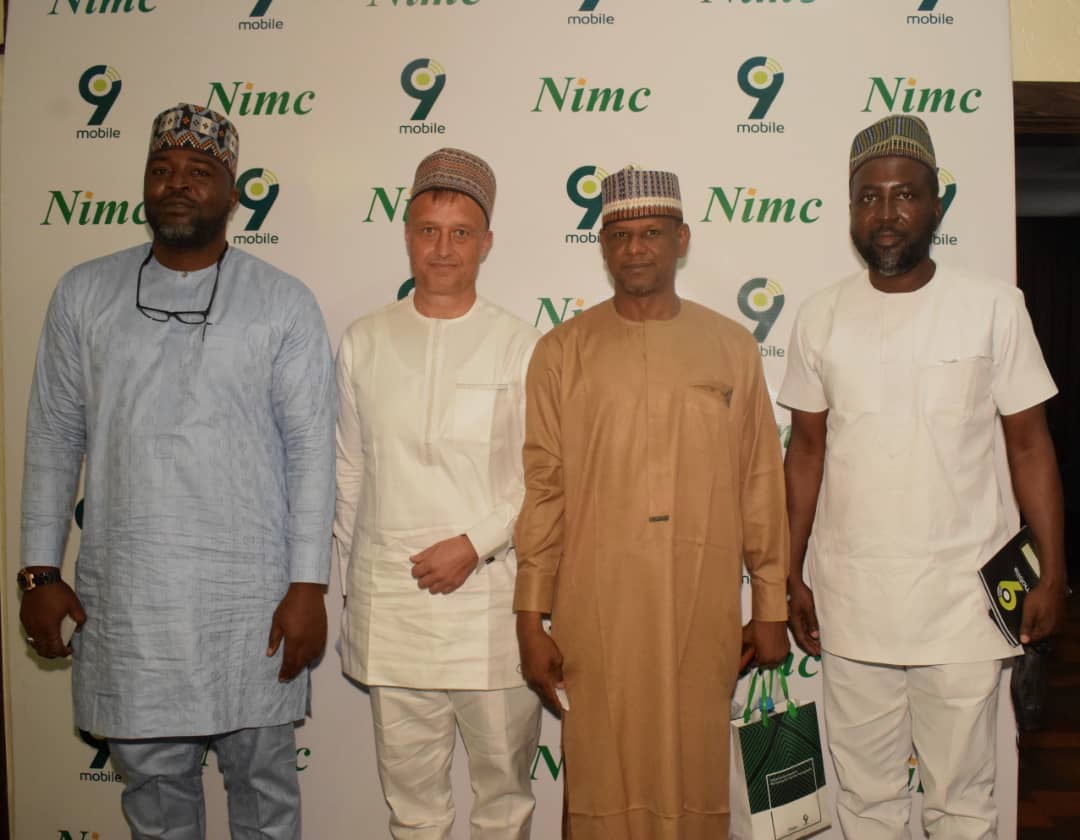
Nigeria’s leading telecommunication services provider, 9mobile, has reiterated its support to the nation’s identity management commission. The telco gave the assurance at the one-day stakeholder engagement workshop and capacity building interactive session organized in collaboration with the National Identity Management Commission (NIMC), held last weekend in Abuja.
The workshop was organized to examine the capabilities and challenges in the NIMC service delivery process to proffer solutions to identified challenges.
Delivering his remarks, Chief Executive Officer, 9mobile, Juergen Peschel, commended the management of NIMC for supporting the workshop to engage stakeholders in the industry.
He said, “9mobile will continue to play a pivotal role in the country’s national identity management enrollment scheme, especially in the rural areas where we have the mandate to register 10 million individuals. To ensure that we meet up with the target, we are constantly expanding our capacity in terms of infrastructure and technology to ensure that all Nigerians are enrolled.”
Director of Sales, 9mobile, Oluwatosin Olulana, stressed the need for ongoing engagement with stakeholders to strengthen the nation’s identity management process. He said, “9mobile will be sharing resources with NIMC to improve the process of service delivery. In addition, mobile connectivity will also be made available for the next six months to aid the virtual working process. We are currently arranging to provide up to 20Mbps fiber connectivity for NIMC office use. We believe providing the necessary infrastructure will enable the commission to deliver on its mandate in the interest of the country.”
While restating the commission’s commitment to fostering the development of a robust identity system in Nigeria, Dr. Umar Ba, who represented the Director-General, NIMC, Engr, Aliyu Aziz, called for collaboration among stakeholders. “NIMC cannot do it alone, and as such, we will continue to seek for collaboration from stakeholders and particularly from 9mobile, one of our most trusted allies,” he remarked.