
To address the fundamental causes of insecurity, the National Economic Council yesterday approved the creation of a Cotton, Textile, and Garment Development Board. This initiative is accompanied by new plans for agribusiness growth and livestock transformation, which are expected to create up to $90 billion in economic value by 2035.
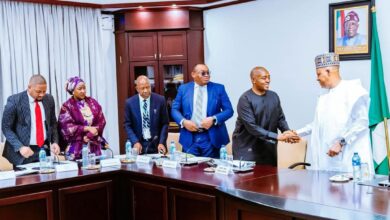
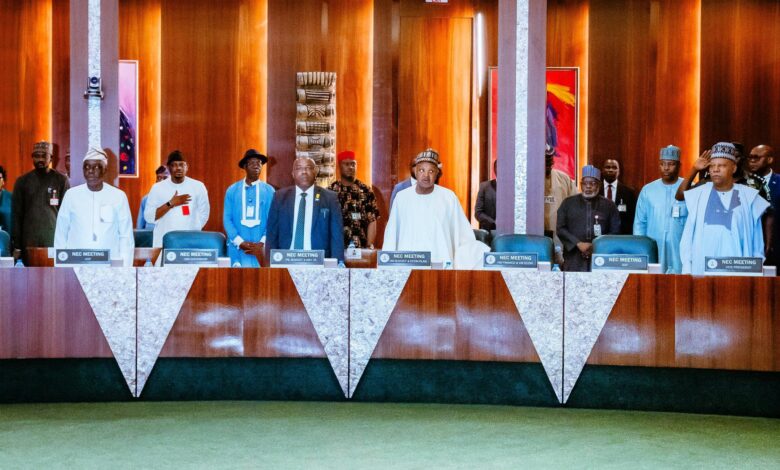
Vice President Kashim Shettima, who chaired the council alongside the governors from all 36 states of the federation, the Governor of the Central Bank of Nigeria (CBN), the Minister of Finance, and additional government officials, endorsed the proposal to create the Board.
The board, when set up, will be domiciled in the Presidency, private sector-driven, with representation of the relevant public sector stakeholders, and funded from the Textile Import Levy being collected by the Nigeria Customs Service (NCS).
The council also authorized several other initiatives, such as setting up the Green Imperative Project (GIP) national headquarters in Abuja, along with regional offices in each of the six geopolitical zones. Additionally, steps will be taken to resolve the issues caused by the existing animal husbandry practices in the country.
During its 149th NEC meeting on Thursday at the Presidential Villa in Abuja, the council paused to hold a moment of silence in honor of the victims of the recent violence in Benue and Plateau States. The NEC also extended its sympathies to the citizens and authorities of the impacted states.
NEC also gave the green light to set up a national office for the Green Imperative Project (GIP) in Abuja, along with regional offices in each of the six geopolitical zones. Additionally, they endorsed seeking support for the official introduction of the National Agribusiness Policy Mechanism.
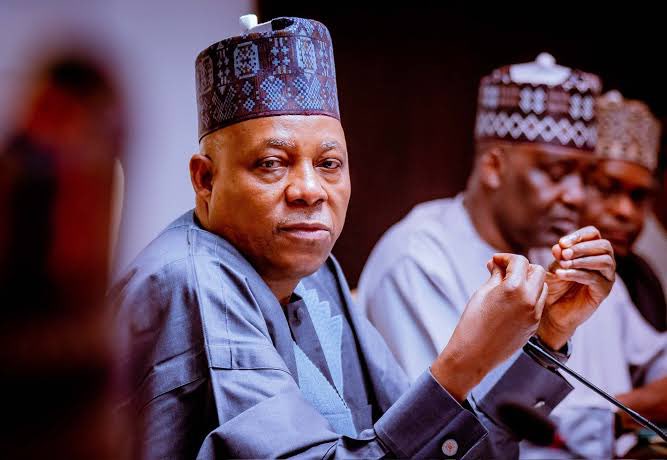
In the context of discussing empowerment and food security, Vice President Shettima urged Council members to approach decision-making with bravery. He emphasized the importance of avoiding empty rhetoric and focusing on the challenging yet vital task of implementing reforms.